Запросы по оборудованию

Технические статьи

Новости/Технические статьи

22 статьи

Максимальный изгибающий момент: формулы, разобранные примеры и инженерная оценкаТехнические статьи

Максимальный изгибающий момент: формулы, разобранные примеры и инженерная оценка

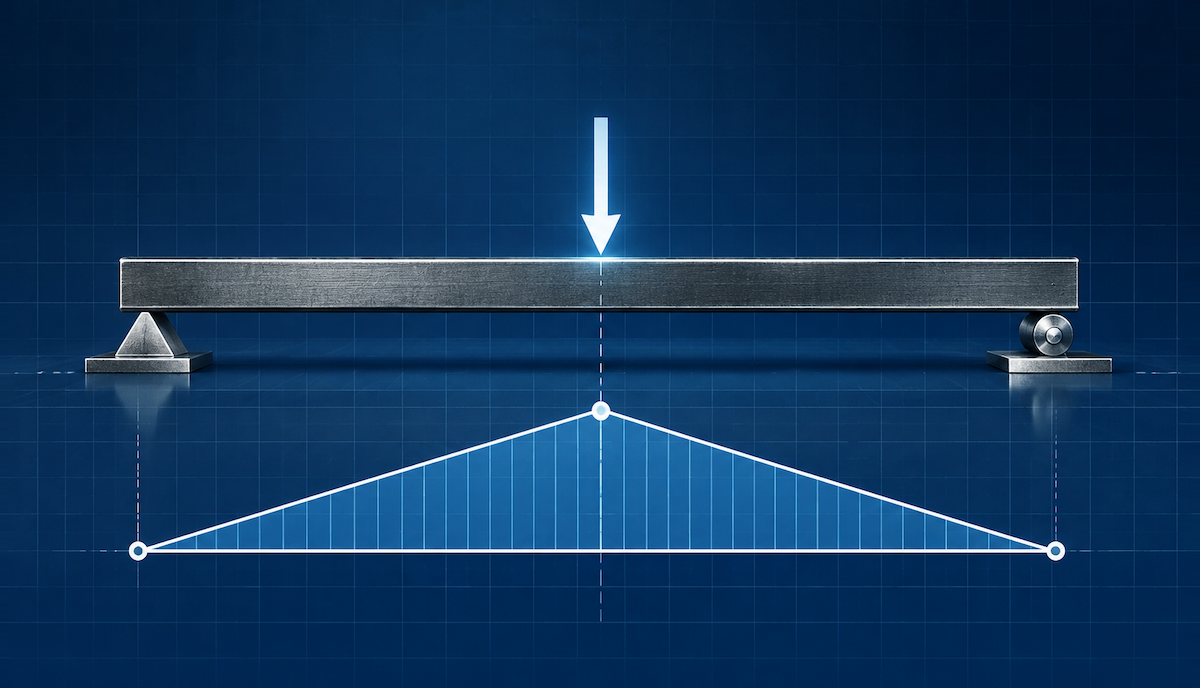
Максимальный изгибающий момент — одно из первых чисел, к которым обращается инженер: он задаёт нижнюю границу при подборе сечения, определяет выбор материала и то, как планируется тоннаж машины, и любое последующее решение наследует ошибку, если это число неверно. Это руководство проходит весь путь расчёта: что такое изгибающий момент с точки зрения механики; почему «максимум» относится к двум разным числам; почему схему опирания и нагрузку нужно задать в первую очередь; четыре шага к поиску максимума; пять формул, покрывающих большинство случаев ручного расчёта, и два полностью разобранных примера; а также как перенести результат в проверку напряжений при изгибе. Здесь же разъясняется то, что чаще всего применяют неверно: момент первой текучести конструктивной балки — это не тоннаж листогибочного пресса. Обе исходные таблицы, каждая формула и каждое число сохранены в том виде, в каком они опубликованы.

Читать далее
Безопасность листогибочного пресса: 12 опасных факторов, ограждения и требования OSHAТехнические статьи

Безопасность листогибочного пресса: 12 опасных факторов, ограждения и требования OSHA

Листогибочный пресс способен сомкнуться с усилием, достаточным, чтобы раздробить кость за доли секунды, при этом руки оператора обычно находятся всего в нескольких сантиметрах от этого смыкающегося зазора. На листогибочном прессе опасная зона и рабочая зона — одно и то же место. В этом руководстве разобраны 12 опасных факторов, стоящих за большинством травм на листогибочных прессах, изложены повседневные правила их предотвращения, объясняется, как на самом деле работают световая завеса и лазерная защита, в чём ограничены защитные ограждения и двуручное управление, чего требуют OSHA, ANSI, EN и ISO, а также приведён контрольный список, который операторы могут выполнять каждую смену. Обе сравнительные таблицы и все номера стандартов сохранены в исходном виде.

Читать далее
Инструментальная оснастка листогибочного пресса для свободной гибки, гибки с полным прилеганием и чеканочной гибки: полное руководствоТехнические статьи

Инструментальная оснастка листогибочного пресса для свободной гибки, гибки с полным прилеганием и чеканочной гибки: полное руководство

Air bending, bottoming and coining get used interchangeably on the shop floor, but they are three different processes and they need three different sets of tooling. Choose wrongly and the angle drifts, the tooling dies early and the sheet cracks — and none of that is the machine's fault. It starts with mixing up the method. This guide takes the three apart one at a time: how the tooling works in each, what it demands, how to select it, how to manage springback, how the machine type changes the picture, and the five mistakes that cost the most.

Читать далее
Проблемы качества лазерной резки: устраните причину, а не добавляйте мощностьТехнические статьи

Проблемы качества лазерной резки: устраните причину, а не добавляйте мощность

Incomplete cuts, bottom dross, a kerf that is too wide, dross on one side only, burned sharp corners and dimensions that drift: all of these happen every day on the shop floor, and the first reaction in most cases is to add power. Cut quality is never decided by a single parameter. It is the combined result of how laser energy is focused, absorbed by the material and cleared by the assist gas, plus how the machine moves, how the part is programmed and how stable the environment is. This guide takes that chain apart into nine variables, each with what to check first, what to check next and why, and keeps the source seven-row troubleshooting table unchanged so you can work back from the symptom instead of guessing at parameters. Nine chapters cover the physical chain a cut follows, the beam and the focus, gas and nozzle, motion and maintenance, programming and environment, and the guide closes with two points about applying the method to a GWMT machine: published figures are reference ranges rather than a rated commitment, and buying a machine and running it well are two different things.

Читать далее
Как выбрать ножи для гидравлических гильотинных ножниц: материал, геометрия, заказ и стоимость одного резаТехнические статьи

Как выбрать ножи для гидравлических гильотинных ножниц: материал, геометрия, заказ и стоимость одного реза

Комплект ножей для замены обходится намного дешевле новых гильотинных ножниц, но цена неверного выбора ножей остаётся незаметной: они не отказывают на первом же резе, а вызывают рост заусенца, раннее выкрашивание кромки и заметно меньший срок службы ножа, чем он должен отработать. Многие мастерские заказывают тот же номинальный размер, что и в прошлый раз, и в итоге расходуют ножи быстрее, чем того требует станок. Это руководство разбивает выбор на четыре шага, которые необходимо выполнить именно в таком порядке: подтвердить, какой нож одобрен для станка, описать фактически обрабатываемый материал и условия производства, выбрать марку стали и геометрию, соответствующие этой работе и характеру отказа ножа, а затем подтвердить выбор пробными резами, а не на глаз. Сравнение четырёх распространённых марок ножей — 9CrSi, группы D2/SKD11/Cr12MoV, 6CrW2Si и H13 — приводится без изменений, вместе с перечнем проверок, охватывающим чертёж станка, настройку зазора и реальную стоимость одного реза.

Читать далее
Пропорциональный клапан листогибочного пресса: принцип работы, синхронизация и диагностика неисправностейТехнические статьи

Пропорциональный клапан листогибочного пресса: принцип работы, синхронизация и диагностика неисправностей

When the ram runs faster on the left than on the right, nine people out of ten will say the proportional valve has a problem. Get to the machine, open it up, and the valve is usually fine: the fault is somewhere else and only shows up as a synchronisation symptom. This guide takes that control chain apart in ten sections: what the proportional valve actually is, how an electrical signal becomes hydraulic flow step by step, what the valve opening is doing at each of the six phases of a bending cycle, how closed-loop Y1/Y2 synchronization keeps the ram parallel, where the real difference between proportional and servo valves lies, how to locate a fault at the correct system layer before anything is disassembled, the five parameter groups a replacement has to match, and whether the ram is safe once the power is off. All four source tables are kept in directly usable form: the two feedback types, torsion-bar against electro-hydraulic synchronization, proportional against servo valve characteristics, and the first-check order for six symptoms.

Читать далее
Методы гибки листового металла: 11 типов формовки, ключевые факторы и как выбратьТехнические статьи

Методы гибки листового металла: 11 типов формовки, ключевые факторы и как выбрать

The same 2 mm sheet steel can become a 90 degree bracket, a U channel, a hemmed sealing edge, a stepped offset, or a continuous curve. What decides which method applies is not habit but the part geometry, material and thickness, tolerance, appearance requirement and batch size. This guide sets out the full range of bending methods: the four basic forming modes of V bending, air bending, bottoming and coining, plus the seven dedicated methods of U bending, folding, wipe bending, roll bending, rotary bending, hemming and offset bending. All three source tables, the eleven-method quick reference, the part-scenario mapping and the machine-per-method table, are kept in directly usable form, together with a set of checks to run before releasing a bending drawing.

Читать далее
Как работать на лазерном станке резки: пошаговое руководство из 10 шаговТехнические статьи

Как работать на лазерном станке резки: пошаговое руководство из 10 шагов

A laser cutting machine can produce thousands of dimensionally identical parts, or it can scrap a full job in its first work order because one startup step was out of order, the focus was off by half a millimetre or the first article was never inspected. This guide breaks the complete operating sequence into ten stages: safety and readiness, startup and homing, CAD/CAM and toolpath, loading and job origin, head calibration, trial cut and first article, production monitoring, troubleshooting, shutdown and routine maintenance. Each stage states what to do first, what to check next, and the conditions that mean you stop and call for service. All three source tables, layer assignment, quick diagnosis and maintenance categories, are kept in directly usable form.

Читать далее
15 распространённых ошибок при работе на листогибочном прессе: причины, последствия и решенияТехнические статьи

15 распространённых ошибок при работе на листогибочном прессе: причины, последствия и решения

One shift can turn out thousands of accurate bends and lose them again in minutes because of a few setup mistakes. This guide takes the fifteen most common press brake mistakes apart one by one: what the mistake is, why it happens, what it costs you in parts and money, and exactly how to put it right. From miscalculated tonnage and mismatched tooling to ignored springback, neglected crowning, backgauge drift, CNC programming, first-article inspection, hydraulic warnings and sheet handling, every section stands on its own for quick reference. All four reference tables are kept in directly usable form: material factors, what drives springback, typical springback and overbend values, and the maintenance interval schedule.

Читать далее
Полное руководство по листогибочным прессам: типы, принцип работы, расчёт усилия гибки и выборТехнические статьи

Полное руководство по листогибочным прессам: типы, принцип работы, расчёт усилия гибки и выбор

A press brake is the machine that puts a straight line into sheet metal, and it is the most flexible machine on the metalworking floor. This guide covers the whole picture in one place: how the five drive types differ, what every part from frame to backgauge actually does, the five steps of a bending cycle, how tonnage is estimated, how to answer the six selection questions, and the daily maintenance and safety baseline. The key specification list, the tonnage formula with its worked example and the quick match guide are given in directly usable form, and every chapter points to the deeper article that covers one topic in full.

Читать далее
Как выбрать V-матрицу для листогибочного пресса и не ошибиться: восемь шагов, три примера расчёта и диагностикаТехнические статьи

Как выбрать V-матрицу для листогибочного пресса и не ошибиться: восемь шагов, три примера расчёта и диагностика

Whether one opening produces acceptable parts depends on whether you check all eight constraints together. This guide turns V-die selection into an executable workflow: fix the bending method, take the starting range for your material, then verify tonnage, inside radius, minimum flange, springback consistency and surface quality before you settle on a slot width, trial bend and record the result. Three worked examples are included - 3 mm mild steel, 3 mm stainless steel and 2 mm aluminium - together with how to work a four-way die, how to diagnose six typical faults, and how to inspect, maintain and store the tooling.

Читать далее
Как выбрать раскрытие V-матрицы для листогибочного пресса: таблица и правило 8×Технические статьи

Как выбрать раскрытие V-матрицы для листогибочного пресса: таблица и правило 8×

A V opening is not a groove width you pick by feel: it settles the inside radius, the tonnage your press brake must deliver and the shortest flange you can form, all at once. This guide gives a lookup chart for V openings, the Rule of 8 with its material corrections, the 16 % relationship between opening and radius, the tonnage formula with two safety checks, the 0.77 × V minimum flange rule, a five-step selection workflow and the four mistakes that cost the most time.

Читать далее