
Flexible bending structure
The bending architecture is reviewed around panel support, flange access, repeatability, and the intended production sequence.
An automated panel-forming platform for repeatable multi-side bending, configured around panel geometry, flange access, material handling, and the planned production rhythm.
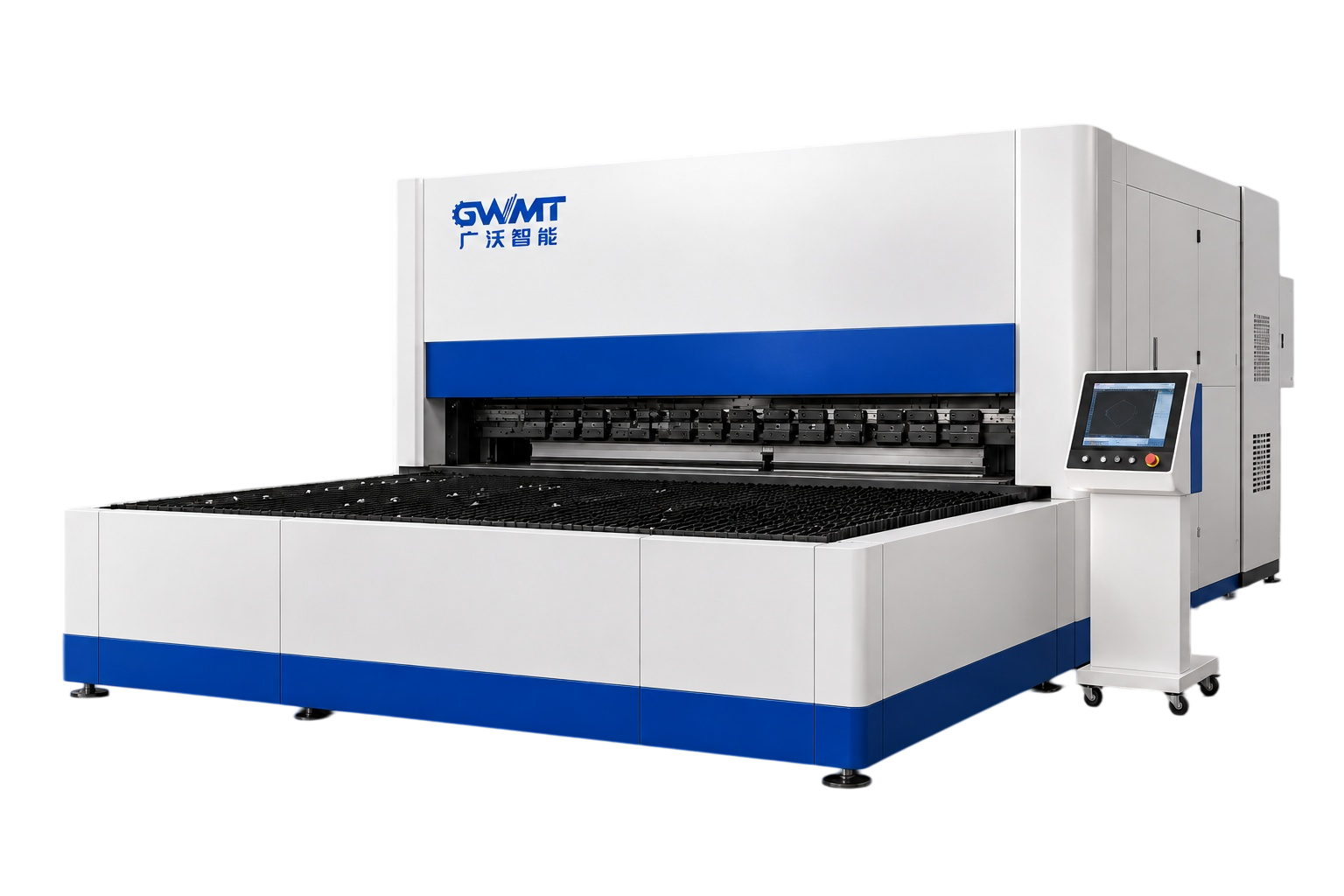
PRODUCT OVERVIEW
The flexible bending center combines programmed positioning, controlled bend sequencing, and reduced manual handling for repeatable panel work. Each configuration begins with the flat pattern, finished geometry, material behavior, and the intended loading and unloading route.
The bending architecture is reviewed around panel support, flange access, repeatability, and the intended production sequence.
Bend direction, tool clearance, return geometry, and the finished-part route are planned together.
Programmed references keep the blank, locating features, and bend order aligned with the approved part geometry.
Programs, part identification, bend sequence, and operator confirmation points are organized around the actual product mix.
Infeed, support, unloading, stacking, and downstream connection are matched to panel size, surface protection, and cadence.
Guarding, operator access, service clearance, and routine maintenance are confirmed with the installation layout.
This page presents planning references for the flexible bending center. Final dimensions, tooling, cycle, handling, safety scope, and acceptance criteria are confirmed from the approved drawing package.
| Planning item | Configuration reference |
|---|---|
| Panel family | Flat pattern, finished geometry, corner construction, and product variation are reviewed together. |
| Material range | Grade, thickness, surface finish, protective film, and permitted handling marks are confirmed. |
| Bend geometry | Flange height, return form, inside clearance, positive/negative bends, and interference are evaluated. |
| Blank preparation | Cut accuracy, holes, notches, identification, and upstream nesting requirements are coordinated. |
| Production rhythm | Batch size, changeover frequency, target output, inspection points, and operator workflow are defined. |
| Material handling | Loading, support, discharge, stacking, and connection to upstream or downstream equipment are planned. |
| Control scope | Program preparation, part traceability, operating permissions, diagnostics, and data handover are reviewed. |
| Safety and acceptance | Guarding, access, training, sample validation, and acceptance criteria are confirmed before delivery. |
TAILORED TECHNICAL PROPOSAL
Share drawings, materials, target output, and current process constraints. An engineer can use them to prepare the next conversation.